Training With Bad Knees: How to Keep Getting Stronger
Bad knees, bad hips, bad something. It's one of the most common reasons people give for stopping training entirely. It hurts. Maybe your doctor told you to stop. And you don't know what to do to work around it.
And honestly, it breaks our hearts a little. Because stopping is usually the worst thing you can do for those joints.
Here's what we've learned from coaching people through this: the joints themselves don’t tell the full story. The muscles around them are often weak and not helping. When those muscles haven't been strengthened in full ranges of motion, the joint takes more load than it should. And when you stop training, those muscles get weaker, not stronger. The pain doesn't go away by sitting out. It gets louder.
Why your doctor told you to stop (and why that advice makes sense)
Doctors follow the Hippocratic Oath. First, do no harm. If they think continuing to work out might cause more pain or discomfort, they're going to tell you to stop. We understand why. They're not wrong to be cautious.
But "stop moving" is the worst long-term prescription for a joint that's already degrading. The muscles that support that joint need load to stay strong. Take the load away and the joint gets less support, not more. The pain you're avoiding by resting doesn't actually go anywhere. It will still be there when you go to move again.
The muscles around the joint are the real issue
Here's something that surprises people: if someone is bone on bone or missing a meniscus, they often don't actually have pain unless they get into very specific ranges of motion. Which means we can work around those ranges.
Pain is something we want to avoid. So we do. But that doesn't mean we stop moving or stop loading those tissues. The tissues around the joint are what keep it stable as you go about your day. Neglect them and things get worse, not better.
We never tell someone their pain isn't real. Pain is real. We let it be our guide. But we also experiment and find ways around the pain to keep strengthening and improving the joint.
What training around bad knees actually looks like
When someone comes in with knee issues, the first four sessions in our on-ramp are the same as they are for everyone. That's because everything we do is both potential exercise and potential assessment. When we ask someone to squat, we're checking their range of motion. Is it pain-free but limited? Then we know we have work to do on strength and motor control. Does it cause pain? Then we adjust the range of motion and modify the mechanics so it doesn't.
We start simple. No weight, or a PVC pipe to test things and learn. Then we build in modifications and scaling options based on what we find.
Running and jumping might be out of the picture. That's fine. We can use bikes, rowers, step ups, and plenty of other options to build strength without adding impact. The goal isn't to force your body through movements that hurt. It's to find the ones that don't, and build from there.
Why a machine isn't the same as a coach
You can find exercises for bad knees all over the internet. A knee extension machine will strengthen your quads. But it doesn't actually train the supporting structures that hold your body weight on the knee in real life.
We focus on movements that are multi-joint and mimic everyday life. Your body probably requires you to do something that looks like a squat. So let's figure out what range of motion you have and how to modify the load or the mechanics so it hurts less. Those are the movements that improve your day to day life.
Without a coach working through those things with you, trying different approaches and using their experience, you're left guessing. Guessing turns into frustration. And eventually you give up because you don't know what to try next.
Adolfo's story
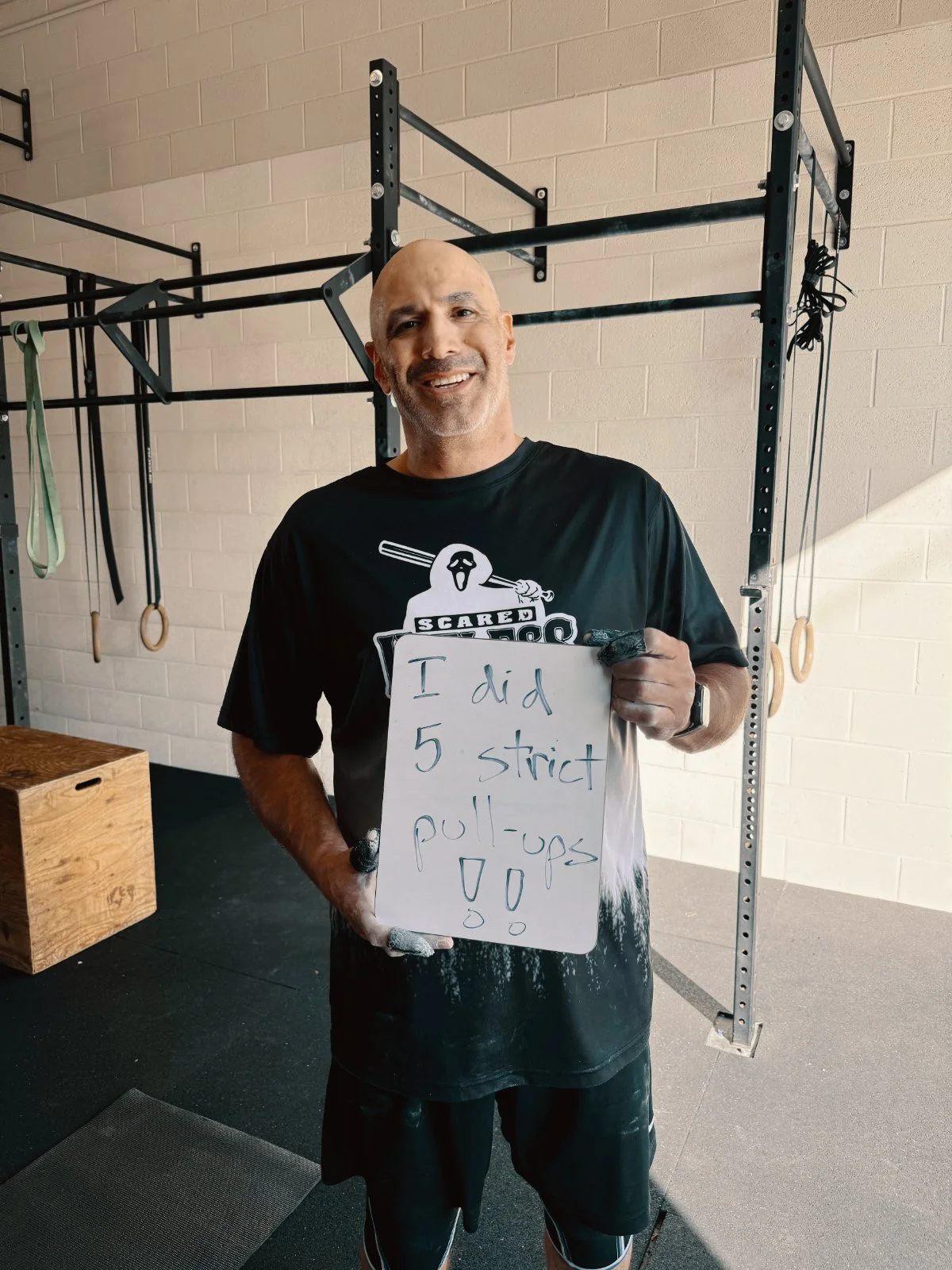
We have a member named Adolfo who came in with bad knees and missing range of motion. He's lost over 100 pounds. His knees feel a lot better now, and he can do far more than he could when he started. Not because we fixed his knees. Because we strengthened the muscles around them, progressed at a reasonable pace, and didn't push him too far. He listened to his body. And he lost the weight that was adding compression to those joints.
We can't guarantee that losing weight will remove all your knee pain. But carrying extra weight on a joint that's already compromised isn't helping. When that's the case, we'll have that conversation. Not "you need to lose weight," but "here's something that could help, and here's how we can support you with coaching and accountability."
Your knees aren't a stop sign
Pain in your joints is not a reason to stop training. It means you have to change how you're training. The first step isn't a squat program or a list of exercises. It's talking with someone who's going to get to know you and your specific situation, figure out what's going on, and build a plan that fits what your body can handle today.
If you've been sitting out because your knees hurt and someone told you to stop, let's talk. Schedule a free intro call and we'll figure out what you can still do.