Training With Lower Back Pain: What's Safe and What Helps
Training with lower back pain probably feels like the last thing you should be doing. The instinct is to protect your back by doing less with it. That makes sense, and for an acute injury, it’s sometimes the right call. But for most people walking around with chronic low back pain, avoiding load is exactly what’s keeping the problem alive.
What’s actually causing most back pain
Most back pain isn’t an injury. It’s a lifestyle problem. If you sit for most of your day, your hip flexors tighten up and pull on your lower back. The muscles around your hips and glutes, the ones that should be doing the heavy lifting, get weak from sitting on them all day. Some of those muscles have atrophied so much that people don’t even know how to activate them anymore. Your midline never has to brace and support you because you’re always in a chair. So when you go to pick up a bag of dog food out of the back of your car, your body doesn’t have the strength or the movement patterns to do it safely. That’s when your back pays the price.
Why training with lower back pain is the fix
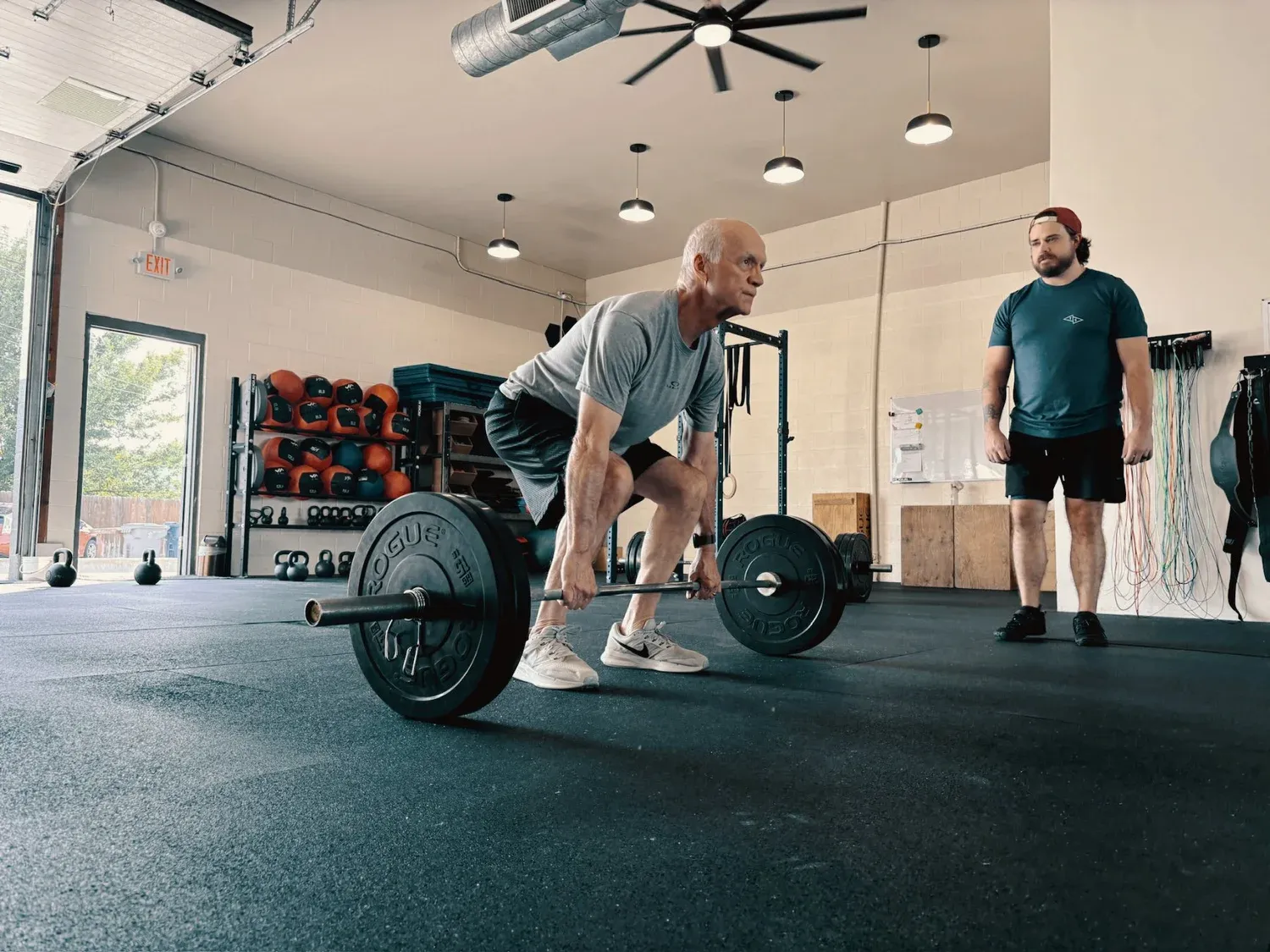
Here’s what surprises people: the movements that feel dangerous are the ones that actually rebuild your back. Deadlifts, squats, carries, sled drags. They work because they’re the same movement patterns you use every day, done under load, with coaching, in a way that builds capacity. An RDL teaches you how to hinge at your hips instead of bending at your spine. A box squat teaches you to control your depth and brace your midline at the same time. A farmer’s carry forces your whole system to stabilize while you move. These are the movements your body was designed to do. You just lost the strength and the pattern to do them well.
Where people actually get hurt
When someone gets hurt deadlifting, it’s almost always because they loaded more than their bracing could handle. Or they never learned to brace at all. That’s a form and progression issue, and it’s fixable with coaching. Done right, with someone watching your form and building you up gradually, these movements are the remedy. The key is progression. You don’t walk in and load a barbell on day one. You start where you are, learn the pattern, and add load only when your body can actually handle it. That’s how you turn a vulnerable back into a resilient one.
What this looks like in real life
I see this all the time at Timber & Steel. People come in wanting to get stronger, lose weight, feel better. Back pain isn’t always their main goal, but it’s often part of the picture. I don’t hand people a generic core routine. We get them moving through full ranges of motion in their hips. We teach them how to brace. And we have them doing RDLs, sled drags, and carries because those movements strengthen the hips and the midline so the lower back doesn’t have to do all the work alone. Weeks go by, and the pain they’ve been carrying for years starts fading, because the training fixed what was causing it.
Where to start
If you’re in Nampa or the Treasure Valley and you’ve been living with chronic back pain, the worst thing you can do is nothing. The second worst thing is guessing your way through it alone. You need someone who can watch how you move and build you up gradually so your back can handle real life again. That’s what we do. If you’re tired of working around back pain instead of fixing it, reach out. We’ll talk through what’s going on and figure out the right starting point for you. You can schedule a free intro call at timberandsteelgym.com/getting-started.