Stay Strong Enough to Keep Doing What You Love
You want to keep skiing. Maybe you want to keep hunting or working in your yard. You want to get down on the floor with your grandkids without wondering how you’re going to get back up. When I talk with people about strength training and healthspan after 40, those are usually the things they care about. They want to keep their active life and take care of themselves for as long as they can.
That gives us something useful to train for. If you want to keep carrying your own pack on a hunting trip, your training needs to help you handle that work. If you want to keep gardening, being able to lower yourself toward the ground and get back up matters. The weight you lift in the gym is one way to build that ability, but it only makes sense when you connect it to what you want your body to do.
Strength training and healthspan after 40
Healthspan means the years you spend in good health. I think about it in terms of what you can still do. Can you take care of things around your house? Can you go on the trip you want to take and participate instead of sitting it out?
Strength training can help maintain muscle and improve physical function as we age. That matters when you’re standing up from a chair or lifting a bag of dog food out of the car. You don’t need to care about setting a lifting record to care about being able to do those things yourself.
We’ve worked with women who wanted to keep up with their husbands while hunting. They wanted to carry their own pack and equipment and help carry out an animal. As their fitness improved, they were better able to carry their equipment and help carry out an animal on those trips.
Strength is one part of that preparation. Hunting also asks for endurance, and skiing asks for more than the ability to lift something heavy. We train fitness broadly because your activities ask different things of you. If returning to a sport is your goal, I’ve written more about preparing for the demands of that sport.
Notice what you’ve stopped doing
A pattern I see in coaching is that people haven’t used a movement in years. Then one day they try it and realize it’s much harder than they remember. By then, it’s easy to call the limitation “just getting older” and let the activity go.
Aging changes what our bodies can do, but many people can still maintain or improve their strength as they get older. If you haven’t asked your legs to move through a deep bend in a long time, struggling to stand up from a low seat doesn’t tell you everything about what you’ll be able to do with practice.
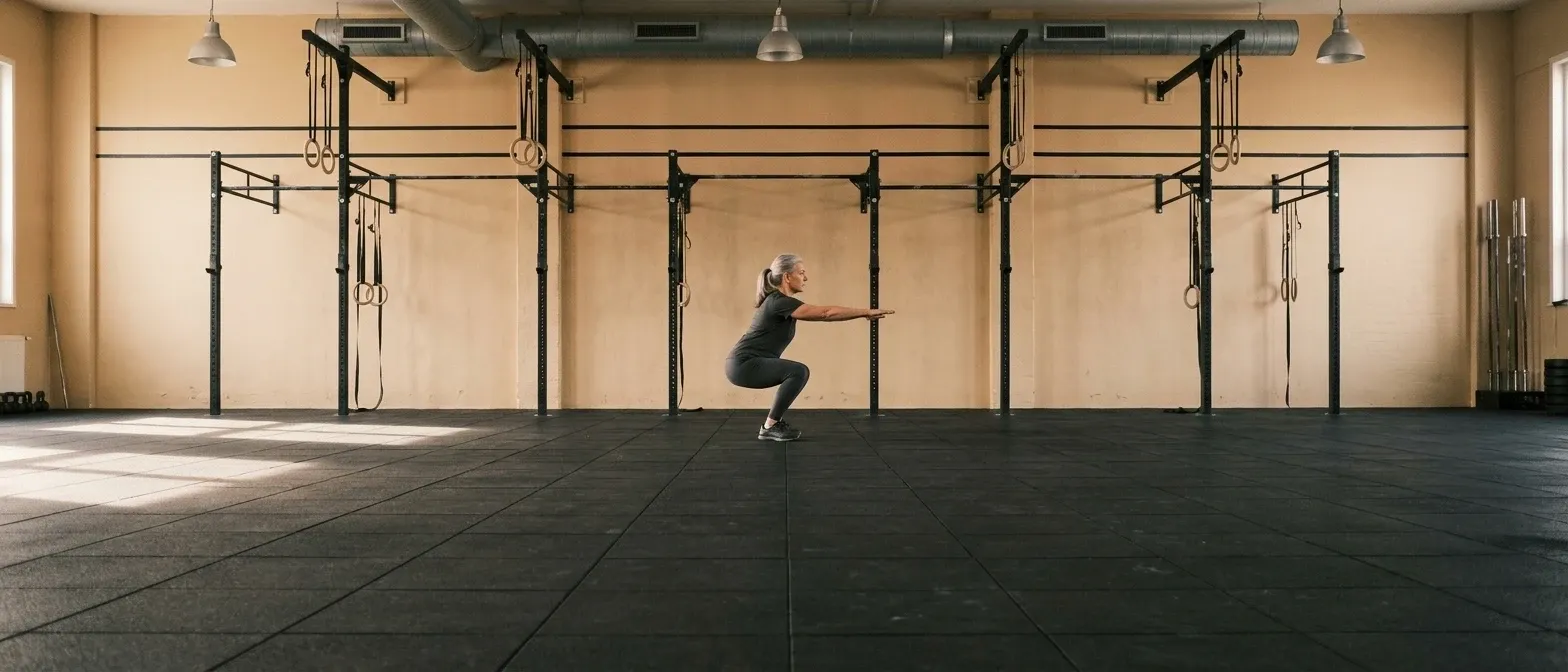
We’ve had members in their 80s tell us they were struggling to get off the couch. We worked on squats, gradually asking them to use more range of motion as they could manage it. Building strength in that lower position made it easier for them to stand up from the couch or toilet.
Your situation at 45 will look different. You might still be doing everything you want to do. That’s a good reason to keep using those abilities rather than waiting until an everyday task becomes difficult. Start by noticing the movements you’ve begun avoiding and the activities you’re doing less often.
More weight comes after better movement
The mistake I see across ages is making heavier weight the first priority. I want you to get stronger, but I want that strength to help you do more. Cutting a squat shorter every time you add weight can leave you avoiding the very position you need to get stronger in.
Here’s the order we use:
-
Learn the mechanics and find good positions.
-
Keep those positions as you work through more range of motion.
-
Add load when you can maintain both.
Then you repeat that process. The right starting load might be your body weight. It might be a light weight that lets you practice the movement well. You work toward the range of motion that’s appropriate for you without forcing a position you can’t control.
When you add weight, you’re challenging the movement you’ve developed. If your positions change or you can no longer use the same range of motion, we need to adjust the load or spend more time practicing before moving on.
It’s a slower process than putting more weight on the bar every time. But if your goal is to get up from the floor, strength through that range of motion deserves your attention. You can read more about building mobility and flexibility as an adult if that’s a part of training you’ve been missing.
Start with work you can repeat
An old injury can make you hesitate. At Timber & Steel here in Nampa, we start with movement you can manage and pay attention to how you respond. We teach barbell lifts with a PVC pipe so you can practice the mechanics before adding weight.
We adjust the load, intensity, and number of repetitions to your starting point. Often, you’re practicing the same movements as other people in the gym with a different amount of work. When a movement doesn’t fit what you can do, we change it.
We also don’t find your limit in one day. How something feels during a session isn’t the whole picture, especially when an old injury is involved. We need to know how you feel afterward, including a day or two later, before deciding how to progress. Good mechanics and gradual progression aren’t a guarantee against injury, and coaching isn’t medical treatment. An injury that needs medical assessment belongs with a qualified clinician.
For now, think about an activity you want to keep doing ten years from today. What does it ask of your body, and are you regularly practicing any of that work? Carrying your own equipment or standing up from a low chair gives your training a purpose you can recognize.
If you want help turning that purpose into a plan, schedule a free intro call. We’ll talk about what you want to keep doing and where you’re starting. Our 90-day program begins with four one-on-one On-Ramp sessions and includes 30, 60, and 90-day reviews, so you can learn the movements with a coach and build a routine around the life you want to keep living.